Trust is under pressure at work today - especially in hybrid and distributed contexts, where visibility is uneven and signals are easy to misread.
This episode looks at trust as something shaped by context: the medium, the pace, and the moments where people decide whether to lean in or hold back. Kursty Groves is joined by trust expert Rachel Botsman to unpack:
- How trust has shifted over time, from local and institutional forms to more distributed and mediated ones
- Why visibility and proximity still matter, even in digital-first work
- Why some trust breakdowns can’t be repaired through messages alone
- How friction, uncertainty, and discomfort show up in trust dynamics
- What it means to design conditions that allow trust to form, stretch, and recover
Listen to the episode here:
Prefer to skim?
Use the timestamps to jump to the sections.
• Defining trust beyond risk, certainty and outcomes (04:49)
• How video-call backgrounds shape credibility (Durham study) (05:53)
• Why “trust” as an organisational value is hard to act on; why context beats averages (08:32)
• Rachel’s definition: trust as “a confident relationship with the unknown” (10:42)
• Four trust shifts: local, institutional, distributed, augmented (10:42–15:18)
• Visibility and proximity bias in hybrid work: what changes when shared cues thin out (21:34)
• Hybrid/RTO intention check: “you’re doomed before you begin” if it’s driven by mistrust (24:12)
• Trust, friction, uncertainty, repair: signals; “stop the email chain… call the meeting” (28:03)
• What makes a “trust space” + “strangely familiar” as a design principle (31:13–33:12)
• Five spatial lenses of trust: physical, digital, social, cognitive, temporal (34:19)
Research links and further reading
This episode draws on a long body of research exploring how trust forms differently in face-to-face and mediated settings, including:
- Bos, Gergle, Olson & Olson (2001): Being there vs. seeing there: trust and video-mediated communication.
- Jarvenpaa & Leidner (1999; 2006): Communication and trust in global virtual teams.
- Tamayo et al. (2023): Zoom backgrounds affect judgements of trust and competence.
- Diana et al. (2023): How video calls affect mimicry and trust during interactions. (Phil. Trans. R. Soc. B)
Key takeaways
- Trust is shaped by conditions, not just character.
- Trust isn’t just a value you state; it behaves more like a working relationship with uncertainty.
- Hybrid work increases the risk of visibility drift; trust (and credibility) can skew towards whoever is easiest to “see”.
- Friction isn’t automatically a problem: some forms of effort, disagreement, and discomfort are part of how trust forms.
- Digital channels thin out context; when things start to fray, leaders need to choose the medium that supports repair.
- A “trust space” can hold safety and healthy discomfort at the same time - and that’s designable.
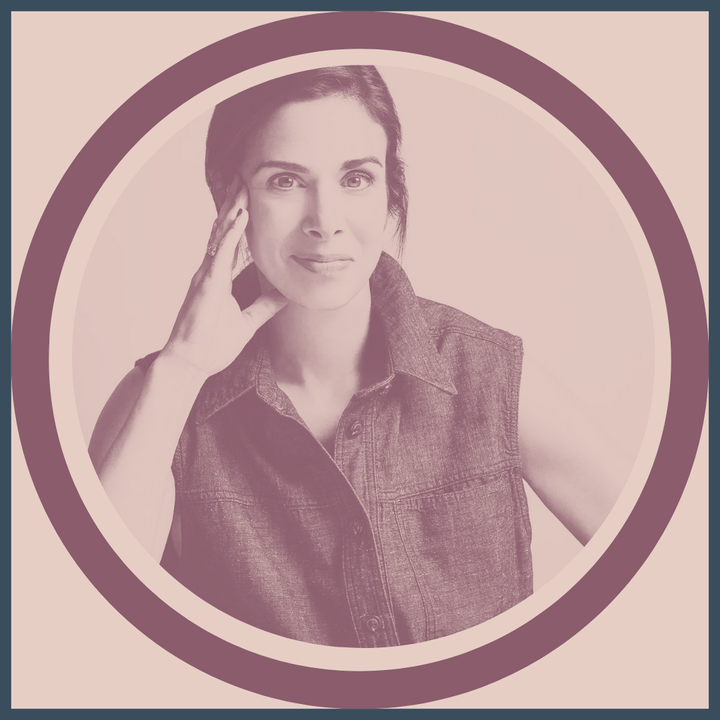
About Rachel Botsman
Rachel Botsman is a leading authority on trust in the modern world, known for connecting history, technology, and human behaviour in fresh and engaging ways. She is the author of three influential books - What’s Mine is Yours, Who Can You Trust?, and How To Trust & Be Trusted - and her writing has appeared in The New York Times, The Guardian, Wired, Financial Times, Time Magazine, and Fast Company.
Rachel is a world-renowned speaker who has spoken on global stages from TED to the World Economic Forum, and delivered keynotes for organisations including Salesforce, Goldman Sachs, Adobe, Gartner, and EY. Her TED talks have been viewed more than five million times.
She was the first Trust Fellow at Oxford University’s Saïd Business School, where she teaches leaders and entrepreneurs how to lead with trust in a changing world.
Rethink with Rachel is Rachel’s thought-provoking newsletter on trust, leadership, and change, with more than 90,000 subscribers worldwide.